Discover how Neighborhood Sun Solar's CEO Gary Skulnik leverages AI, partnerships, and traditional marketing to drive growth in the clean energy sector.
About this episode
Dunja Jovanovic: Hello, Gary, and welcome to the Green New Perspective Spotlight. So for starters, can you introduce yourself and tell us how Neighborhood Sun started?
Gary Skulnik: Sure. Well, I'm Gary Skulnik. I'm the CEO and founder of Neighborhood Sun. I've been in the clean energy space for about 25 years as an advocate and an entrepreneur. I started Neighborhood Sun in 2016 after we passed legislation in my state of Maryland to allow for community solar. I was really excited about it because it allows you to fight climate change by supporting clean energy, but also supporting local, more democratic power.
So it's something that we had never had before, and I was really interested in getting into it. So I founded Neighborhood Sun, and it took us about two years to get off the ground. We started our first project in 2018.
Dunja Jovanovic: One of your main selling points is that you're helping to make solar energy more accessible for communities. Can we talk a bit more about that?
Gary Skulnik: Sure. About 80% of the market in the US does not have access to rooftop solar. If you live in an apartment, if you are renting, if you have shade on your roof or an old roof, or you can't afford an upfront payment, there are a lot of reasons why people can't get rooftop solar. Plus you have to install equipment, and it's a whole deal.
With community solar, all you need is an electric bill, and you are able to subscribe to a portion of the output of a local project. It's going to be a project that is just down the road from you. You can go and visit it. You can see it.
Every month when that project produces power, you get solar credits on your bill and you actually save money. The savings can be anywhere from 10% to 30% off your electricity bill, which is substantial. It's also the only solar option for people who are low or moderate income, who have no chance to get rooftop solar. For them this is especially important, because every dollar there counts.
Dunja Jovanovic: You've worked in the climate tech industry for 25-plus years. How has the industry changed, especially when it comes to how communities are accepting renewables?
Gary Skulnik: It's night and day from when I started. When I first started, there were a few core people who were very interested, but almost everybody else laughed at it and thought it was not realistic. There was no market penetration. There was a joke about the solar market in Maryland that it was two guys in a truck, and it wasn't that far off from the truth.
It took many years of work. The Al Gore film An Inconvenient Truth was a big milestone. Hurricane Katrina in the US was also a big milestone that finally got people waking up to the dangers of climate change.
The initial push in clean tech in the US was more in wind power than in solar, because wind was more price competitive and solar was still very expensive. That has shifted now. It's all solar all the time, plus storage, of course. Now we have people on Wall Street and the bankers interested. The people who show up at solar conferences are very different from the people who showed up 20 years ago.
It's also far more inclusive. You see a more diverse group of people involved, and there's more recognition that the energy equity question has to be answered. A lot of the communities who suffered the most from air pollution or climate change impacts don't have a lot of political power and are overlooked by the market. So there's finally a recognition that those communities need to see the most benefits as well.
Dunja Jovanovic: Scaling is still a big deal, and we love hearing about the highs and lows here on the podcast. What challenges did you run into while scaling the company, and how did you work through them?
Gary Skulnik: The biggest challenge we had is not super recent. When we first started, it was about two years of work before we launched our first project. Me and one other person went around the state of Maryland educating people and building our email list. Everybody was so excited. We had a list of over 10,000 people.
When we finally launched our first project, we thought we'd just hit send to this list and get 500 enrollments right off the bat. We needed 1,100 for this project. We did that, and we got one enrollment. That was a rough day. It's one of those days where you ask, why am I doing this?
So we looked at what the problem was and what we had to do, and a big part of it was trust. It sounded too good to be true: you could save money, there was no equipment to install, and you were supporting solar. So we worked with local NGOs. We did personal videos explaining how it works. We also lobbied the project owners to make the contract conditions a little better for consumers. Through a lot of blood, sweat and tears, it took us about three or four months, but we did finally fill up that project.
Dunja Jovanovic: So it's about building trust, simplifying the message and showing proof that it works and actually helps people.
Gary Skulnik: Yes. And there's nothing to install, so it's really easy to use.
Dunja Jovanovic: When you were growing the company, what were some of the best strategies you used to get the word out?
Gary Skulnik: Our best approach is partnerships. We have a lot of partnerships with NGOs and businesses. One of our biggest is Johns Hopkins University, but we also have small churches, synagogues and civic groups. Customers we get through those partnerships are very sticky. They stay with the program, and they're also the lowest cost. Referrals are also a great method.
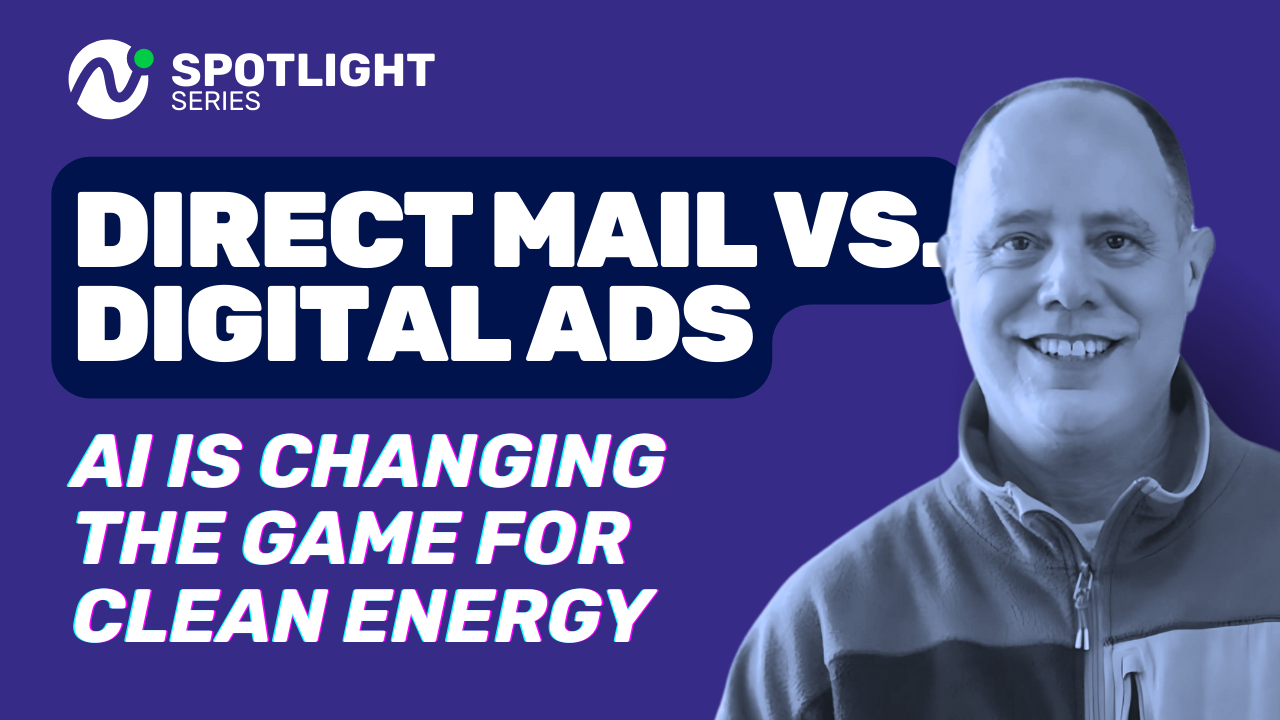
The challenge with those two methods is that they're hard to do at scale. In markets where we don't have a big presence, our biggest success, believe it or not, is a technology from last century: direct mail. We found that the people who enroll with us skew a little older, and those folks still check their mail and like to hold something in their hands rather than see it on a screen.
Dunja Jovanovic: So first you explore who your audience is, and then you adjust the strategy to how they communicate.
Gary Skulnik: Yes. We are always thinking about our demographics and how we can better target the audience, because a broad approach is very expensive. It's much cheaper to target the specific people who are most likely to enroll.
One of the things we're working on is an AI tool that will analyze customer data to better understand which customers are most likely to enroll and also most likely to stay. When people cancel, which is called churn, that has a cost to us. And one of the selling points of Neighborhood Sun is that we have a very low churn rate.
Dunja Jovanovic: Is there anything new and upcoming for Neighborhood Sun?
Gary Skulnik: The big exciting thing is more work on AI and machine learning to better target our customers and to be more efficient with our software platform. We built our own platform called Sun Engine. It's proprietary, and we've been told it's the best in the industry. It's very flexible and customizable, and we want to keep innovating by integrating more AI into it.
We're also looking to expand to other states. Community solar is not in every state in the US, but there are some very active states where we don't yet have a presence, like Illinois, New Mexico and Oregon. We're hoping to get to California as well. Some regulatory changes need to happen there, but we're confident they will, and once they do, we expect to be a big player.
Dunja Jovanovic: Are you optimistic about the changes in the climate tech sector that are coming with the new administration?
Gary Skulnik: I don't think the new administration is going to have a very positive role, but I also don't think it's going to have a very negative one. First of all, the market is speaking. New clean energy is cheaper than new coal or new gas, so in that sense it doesn't matter what the government does. There's also so much innovation around storage and distributed generation that I don't think the government will get in the way.
They have an all-of-the-above approach, which includes solar and other climate tech. So I'm not worried, but I'm not saying they will be a champion either. I do hope that if they reduce some regulations and spark more economic growth, that will help the industry as well.
Dunja Jovanovic: Where can our audience find out more about Neighborhood Sun?
Gary Skulnik: Our website is NeighborhoodSun.solar. You can also find us on all the major social media channels.
Dunja Jovanovic: Thank you, Gary, for being a guest on our podcast.
Gary Skulnik: Thank you, Dunja. It was a pleasure.