Discover how Inogen Alliance stays ahead in the competitive sustainability consulting industry by leveraging local expertise and a strong global network.
About this episode
Dunja Jovanovic: Hello, Angelique. Welcome to the Green New Perspective Spotlight.
Angelique Dickson: Thank you very much. I'm very happy to be here today.
Dunja Jovanovic: Can you tell us a bit more about yourself and give us a brief overview of Inogen Alliance and the mission that drives your work?
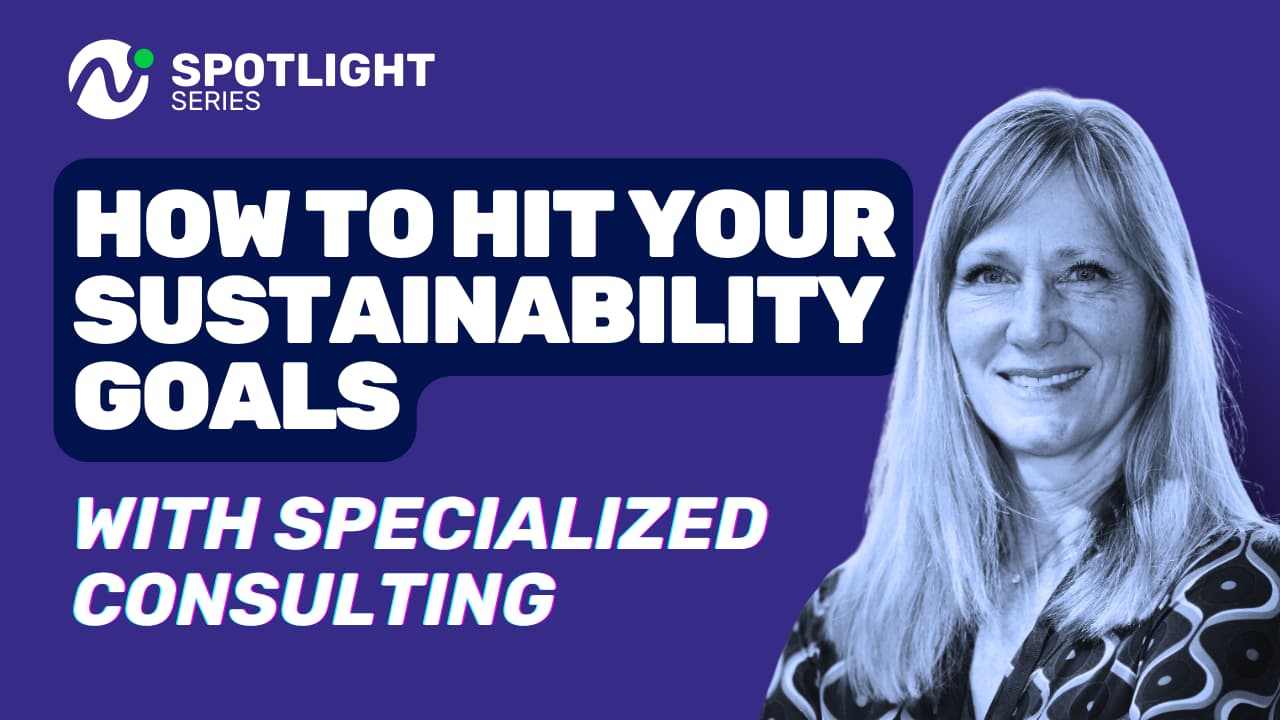
Angelique Dickson: I actually have two roles in my professional career. One is I am Senior Vice President within TIG Group USA, which is an environment, health and safety and sustainability consulting company. But a big part of my job is to be president of the Inogen Alliance.
The Inogen Alliance is a group of companies, over 70 companies globally, that provide very similar services and are very similar in values and objectives. This alliance has been together for a long time. We're hitting our 25th year. So we are a long-standing group of people that work very closely together.
My role as president is to make sure that our alliance members know how to work well together. We're responding to the market so that we can be effective in helping companies pursue their missions and their visions around environment, health and safety and sustainability. Ultimately our goal is to make the world a safer, more sustainable place.
Our mission is really to accelerate a more resilient planet for all. That's really our purpose.
Dunja Jovanovic: So you offer global environment, health, safety and sustainability services. What are some of the biggest sustainability or environmental challenges that your clients face?
Angelique Dickson: When you look at the world today, traditionally environment would have been, oh, I need to do permitting, or I need to clean up something that's spilled. But in today's world, everything is looking at how we are going to mitigate the effects of climate change while having viable, successful businesses.
That's really where we spend our time. We try to understand what will help companies further their agenda in the energy transition, for example, lowering their carbon footprint. How will they ensure that their employees are healthy and safe?
We need our employees to come to work and be safe. That is generally part of an ESG commitment. At the same time, how are we more sustainable in using resources like water or energy? Waste is a big factor in how we operate our businesses. So when you think about our services, they are very, very broad.
We have 1,000 consultants around the world. One of the things I love is working with a global company here in the US. I may not know the answer on, let's say, biodiversity, but I have all these people behind me who can bring that expertise to the client.
So it could be compliance, all the way to strategically looking at what the next 20 to 30 years look like for their energy transition.
Dunja Jovanovic: You work with a lot of different companies spread all around the globe. How do you ensure consistent service quality across global regions while adapting to local needs and different regulations?
Angelique Dickson: That's a perfect question. One of the core beliefs of the Alliance is that global thinking with local delivery completely separates us. 25 years ago, when the Alliance was starting, our folks were very clever.
They realized that instead of sending Americans all over the world to understand regulations, cultural nuances and so on, a local person is going to be much more effective. The way we do that is with what we call a single point of contact. Let's say the company is in the US.
We could have a contract in the US. Culturally and language-wise, we're working in a comfortable zone for that company. Then they say, okay, we need to do gap assessments in 10 countries around the world.
That US person would coordinate with our local colleagues in every one of those countries. They do the audit or the assessment, interpret the regulations for applicability, document findings and make recommendations, all based on what's locally expected. That way the company has a consistent template for these assessments, but they are getting the local perspective.
Even though I might be able to read a regulation on the books in English, that doesn't mean it's being applied the way my American perspective would perceive it. So we find it's very effective to have the local person be the actual implementer of that work. Internally, we have a really long-standing method.
We use what we call work orders, so we communicate clearly between our partners around the world. The expectations are clear and we standardize how we approach the work. And these are colleagues that I know by first name. They are not strangers that we talk to once every 10 years.
If you want to go to Italy, I'll talk to Beatrice or Damiano, and they will make sure that we are doing great work for the clients. If we go to South Africa, Spencer is ready to go. Or Eduardo in Argentina. These are colleagues that we genuinely work with every day.
Dunja Jovanovic: The sustainability consulting space has become super crowded recently. Your company has been in the market for quite some time. Which marketing strategies do you use to stay relevant?
Angelique Dickson: For us, a couple of things are really important. One is global thinking and local delivery. What's happening in Brazil is very important, let's say around water and agriculture. Because we have such global representation, we meet in person twice a year. During those meetings, we spend time talking about what is relevant in our market right now.
What are the challenges facing global organizations that we can solve? That helps us fine-tune our services and our marketing approach, so we can communicate what we can do. That is a really important part of how we stay on top of what we can provide in the marketplace.
The other thing is that, like you say, it is crowded. There are management consultancies, for example. One of the things I think we do really well is making sure that bold strategies get implemented. Sometimes we're best as the boots on the ground. Many companies set goals and strategies around sustainability. Turning those into action, and making sure your zero waste to landfill, water reduction or energy reduction initiatives really happen, is more complex.
That's where our local people are extremely effective at helping companies achieve the goals they set around sustainability.
Dunja Jovanovic: So you would say that you market the effects of your services.
Angelique Dickson: Yes, that we can help turn it into action, not just set goals. Of course, we love doing strategic planning and seeing the opportunities that companies can set. But once those opportunities are set, the roadmap to turning them into action is complicated.
A lot of times, it's much more complicated to meet the goals you set than to set them. Seeing those come to life and actually achieving them, we take great pride in that.
Dunja Jovanovic: How high would you say the success rate is with your clients?
Angelique Dickson: That's a very interesting question. I come from a team of scientists and engineers, so that's a different quality.
When we partner with clients, the success is extremely high, like 80%. If it's a commodity, where a client says we need you to do this and that's it, the success is different because we're not part of the journey. Consultants can be excellent partners.
Consultants can also do a commodity. We need a Phase I, that's all we need, we don't want to talk to you about anything else.
So I do think differences in how companies use consultants make a difference in the success of these initiatives. With partnerships, success is super high. With commodity work, clients are very satisfied, but it is not as conducive to meeting really high goals.
Dunja Jovanovic: My last question. With all the changes expected to shape the sustainability space in the coming years, especially in the US, what trends or opportunities do you see shaping the future of your work at Inogen Alliance?
Angelique Dickson: The global geopolitical situation has a huge impact on what's happening, some good and some bad. I do feel our purpose of creating a resilient planet for all is important. The good side is the tighter regulations happening around the world. Take what's happening in Europe, the Green Deal and CSRD. Companies in the US are going to have to respond to that, even if the US regulations will not be as stringent.
So we are going to have to respond on a global front, and the Alliance is well positioned to do that. We can lean on our colleagues. I know Brazil just changed its regulations about what needs to be reported around sustainability. China had a change too.
We can help companies navigate all these small changes, which means they are furthering their agenda. That constant geopolitical change around the globe is quite significant. Our partnership model, where we leverage local expertise, helps global companies be really effective in responding to it.
Dunja Jovanovic: Since this is a short conversation, we only covered a couple of things you're doing. I would like our listeners to learn more about what you do, because I think you are doing really cool things. Where can people get informed or get in touch if they want to partner with you?
Angelique Dickson: Please visit us at inogenalliance.com. And of course, I'm happy to have anybody connect with me on LinkedIn, Angelique Dickson. We are a partnership organization, so I hope people reach out to us.
Dunja Jovanovic: Thank you for being my guest here at the Green New Perspective Spotlight.
Angelique Dickson: Thank you very much. I appreciate the opportunity.